

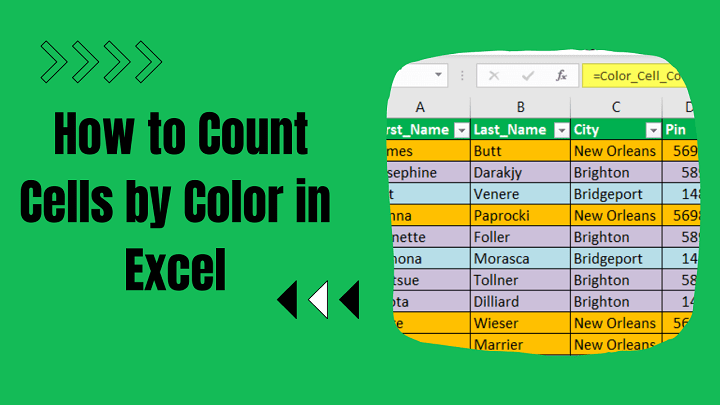
Data visualization is a powerful tool in the world of data analysis. It allows you to present complex information clearly and concisely, making it easier to understand and draw insights from your data. Excel, one of the most widely used spreadsheet applications, offers a variety of features to enhance your data visualization skills. One such feature is “Get Cell Color,” which can be a game-changer in your data visualization endeavors.
In this comprehensive guide, we will delve deep into Excel’s Get Cell Color feature, exploring its capabilities, applications, and how to leverage it effectively for creating stunning visualizations. Whether you’re a seasoned Excel user or just getting started, by the end of this blog post, you’ll have mastered the art of using Get Cell Color to elevate your data visualization game.
Understanding Excel’s Get Cell Color

Before we dive into the practical aspects of using Get Cell Color, let’s first understand what it is and why it’s essential in data visualization.
What is Get Cell Color?
Get Cell Color is a feature in Microsoft Excel that allows you to retrieve the color of a cell within a worksheet. This color information can then be used to create dynamic and informative data visualizations. In essence, it lets you tap into the visual aspect of your data, adding a new layer of context and meaning to your spreadsheets.
The Significance of Color in Data Visualization
Color is a critical component of data visualization. It can convey information, highlight trends, and provide emphasis. When used effectively, color can transform a dull spreadsheet into an engaging and informative visualization that tells a compelling story.
Here are some key ways in which color can enhance data visualization:
- Data Categorization: Color can be used to categorize data points or groups, making it easier for the audience to distinguish between different elements of the data.
- Highlighting Trends: By assigning colors to specific data points or lines, you can draw attention to trends, anomalies, or significant data points within your visualization.
- Emphasizing Data: Using color strategically can help you emphasize certain data points or regions of interest, ensuring they stand out to the viewer.
- Improving Readability: Color can enhance the overall readability of your visualizations, making them more accessible and engaging.
Now that we understand the importance of color in data visualization, let’s explore how to use Excel’s Get Cell Color feature effectively.
How to Use Excel’s Get Cell Color

Excel provides several methods for obtaining cell colors, depending on your needs and the complexity of your data visualization project. Here are some of the key techniques:
Using Conditional Formatting
Conditional formatting is a powerful feature in Excel that allows you to apply formatting rules based on cell values. It can also be used to assign colors to cells, making it an excellent choice for dynamic visualizations.
Here’s how to use Conditional Formatting to get cell colors:
- Select the cells you want to apply conditional formatting to.
- Go to the “Home” tab on the Excel ribbon.
- In the “Styles” group, click on “Conditional Formatting.”
- Choose a rule that assigns colors based on your criteria. For example, you can use “Color Scales” or “Data Bars” to assign colors based on cell values.
- Customize the formatting rules to match your visualization needs.
- Click “OK” to apply the conditional formatting.
Now, your cells will have colors assigned based on the specified criteria. These colors can be used in your data visualization charts and graphs.
VBA (Visual Basic for Applications)
For more advanced users, Excel’s VBA can be a powerful tool to retrieve cell colors programmatically. VBA allows you to write custom macros and scripts to automate tasks in Excel, including extracting cell colors.
Here’s a simplified example of using VBA to get cell colors:
Function GetCellColor(cell As Range) As Long
GetCellColor = cell.Interior.Color
End Function
In this example, the VBA function “GetCellColor” takes a cell as an input and returns its interior color as a long value. You can then use this function in your Excel worksheet to retrieve cell colors.
Color Picker Add-Ins
Excel offers various color picker add-ins that can help you select and extract cell colors with ease. These add-ins provide a user-friendly interface for choosing colors and applying them to your data visualizations.
To use a color picker add-in:
- Search for a suitable Excel color picker add-in in the Microsoft Office Store or a trusted source.
- Install the add-in and follow the instructions for usage.
- Typically, these add-ins allow you to select cells and retrieve their colors by clicking on a color picker tool in the Excel ribbon or toolbar.
- Once you’ve selected the desired colors, you can apply them to your data visualizations.
Manual Selection
For simple projects or when you only need to retrieve colors from a few cells, you can manually select and note down the colors.
Here’s how you can manually select cell colors:
- Click on the cell whose color you want to retrieve.
- Observe the color in the “Fill Color” option on the Excel ribbon (usually in the “Home” tab).
- Note down the RGB values or the color name for reference.
Repeat this process for each cell you want to include in your visualization.
Practical Applications of Get Cell Color in Data Visualization
Now that we’ve covered how to extract cell colors using Excel’s Get Cell Color feature, let’s explore some practical applications of this knowledge in data visualization.
Heatmaps
Heatmaps are a popular data visualization technique that uses color to represent data values. By retrieving cell colors from your Excel worksheet, you can create heatmaps that visualize patterns, correlations, or variations in your data.
Here’s how to create a heatmap using cell colors:
- Use Conditional Formatting to assign colors to cells based on your data values.
- Insert a heatmap chart type, such as a “Heatmap Chart” or a “Conditional Formatting Heatmap,” depending on your Excel version.
- Customize the chart settings to match your visualization goals.
Color-Coded Charts
Color-coded charts, such as bar charts, pie charts, and scatter plots, can benefit from cell color extraction. By assigning colors to data points based on cell colors, you can create visually appealing and informative charts.
Here’s how to create color-coded charts:
- Assign colors to cells using Conditional Formatting or other methods.
- Create your chart using Excel’s charting tools.
- Use the extracted cell colors to color-code your chart elements, such as bars, slices, or data points.
Data Highlighting
In some cases, you may want to highlight specific data points or categories within your Excel worksheet. By extracting cell colors, you can easily identify and emphasize key information in your data.
Here’s how to use cell colors for data highlighting:
- Assign colors to cells that represent important data points or categories.
- Apply these colors to relevant cells in your worksheet.
- Use Excel’s data visualization tools, such as charts and graphs, to create visualizations that highlight the colored data.
Interactive Dashboards
Excel allows you to create interactive dashboards that provide users with a dynamic and engaging way to explore data. By using Get Cell Color, you can enhance the interactivity of your dashboards by enabling users to change colors dynamically.
Here’s how to create an interactive dashboard with cell colors:
- Assign colors to cells that correspond to different categories or data sets.
- Create a user interface, such as drop-down menus or buttons, that allows users to select different colors.
- Use VBA or Excel’s built-in features to update cell colors based on user selections.
- Connect visualizations, such as charts and pivot tables, to the dynamically colored cells.
Common Challenges and How to Overcome Them
While Excel’s Get Cell Color feature is a valuable tool for data visualization, it comes with its share of challenges. Here are some common challenges and tips for overcoming them:
Data Formatting
Challenge: Inconsistent data formatting can lead to difficulties in extracting cell colors. If cell colors are applied manually and not consistently, it can be challenging to create meaningful visualizations.
Solution: Establish clear formatting guidelines for your Excel worksheets to ensure consistent use of cell colors. Consider using conditional formatting rules to automate color assignments based on data values.
Limited Color Options
Challenge: Excel’s default color palette may not always meet your data visualization needs. You may find yourself wanting to use custom colors that are not readily available in Excel.
Solution: Explore Excel’s options for custom color palettes and themes. You can also use color picker add-ins or VBA to access a wider range of colors. Additionally, consider using color conversion tools to match your desired colors with Excel’s color options.
Complex Data Visualizations
Challenge: Creating complex data visualizations that require multiple layers of colors and interactions can be challenging when working with cell colors.
Solution: Break down complex visualizations into smaller, manageable components. Use Excel’s features, such as grouping, to organize your data and visualizations effectively. Consider using VBA for more intricate interactions.
Compatibility
Challenge: Sharing Excel files with dynamic cell colors can be challenging if the recipient does not have access to the same color assignments or color picker add-ins.
Solution: When sharing files, consider documenting the color assignments and any custom color codes used. Provide clear instructions for recreating the visualization on the recipient’s end. Alternatively, use Excel’s built-in themes and color schemes for more consistent results.
Case Study: Using Get Cell Color in Real-Life Data Visualization
To illustrate the practical use of Excel’s Get Cell Color feature in data visualization, let’s explore a real-life case study:
Scenario: You work for a retail company and are responsible for analyzing sales data for various products. Your goal is to create a visually appealing and informative dashboard that highlights the sales performance of different product categories over time.
Approach:
- Data Preparation: Organize your sales data in an Excel worksheet, with columns for product categories, dates, and sales figures.
- Color Assignment: Use Conditional Formatting to assign distinct colors to each product category. For example, assign the color blue to electronics, red to clothing, and green to accessories.
- Chart Creation: Create a line chart that visualizes sales trends over time. Use the cell colors to color-code the lines on the chart, ensuring that each product category has a unique color.
- Interactive Elements: Add interactive elements to your dashboard, such as drop-down menus that allow users to select specific product categories. Use VBA to update the chart and highlight the selected category based on the chosen color.
- Data Highlighting: Use the extracted cell colors to highlight specific data points or periods within your Excel worksheet. For example, you can highlight the highest sales month for each product category.
- Documentation: Provide clear documentation on how to use the interactive dashboard and recreate the color-coded visualizations, including any custom color codes used.
By following this approach, you can create a dynamic and visually appealing sales dashboard that effectively communicates key insights to your team or stakeholders.
Best Practices for Effective Data Visualization with Get Cell Color
To ensure that you harness the full potential of Excel’s Get Cell Color feature in data visualization, consider the following best practices:
Plan Your Visualization
Before diving into data visualization, plan your visualization goals and objectives. Determine what message you want to convey and how color can enhance your data’s meaning.
Use Color Sparingly
While color is a powerful tool, it’s essential to use it sparingly and with purpose. Avoid overwhelming your audience with too many colors or overly vibrant palettes.
Consider Color Accessibility
Ensure that your color choices are accessible to all users, including those with color vision deficiencies. Use color contrast tools to assess the readability of your visualizations.
Test on Different Devices
Test your visualizations on various devices and screen sizes to ensure that the colors render consistently. What looks good on your computer screen may appear differently on others.
Document Your Color Choices
Keep a record of your color assignments and any custom color codes used in your Excel worksheets. This documentation will be valuable when sharing or revisiting your visualizations.
Keep It Simple
Simplicity often leads to clarity in data visualization. Avoid unnecessary complexity in your color schemes and focus on effectively conveying your data’s story.
Seek Feedback
Collaborate with colleagues or stakeholders to gather feedback on your visualizations. They may provide valuable insights and suggestions for improvement.
Related Post:
- DS4 Windows Not Working – 5 Effective Methods
- How to Make VR Lenses without Lens?
- VR Games for Android Without Controller – 5 Fun-To-Try
Excel’s Get Cell Color feature opens up a world of possibilities for data visualization enthusiasts and professionals. By understanding how to extract cell colors and apply them effectively, you can create dynamic and engaging visualizations that communicate insights and tell compelling data stories.
Whether you’re building interactive dashboards, designing heatmaps, or color-coding charts, Excel’s Get Cell Color feature empowers you to take your data visualization skills to the next level. As you embark on your data visualization journey, remember to plan, experiment, and seek inspiration from the vibrant world of colors to bring your data to life.
With the knowledge and techniques shared in this guide, you are well-equipped to master the art of data visualization using Excel’s Get Cell Color, turning your data into visual masterpieces that captivate and inform your audience.