

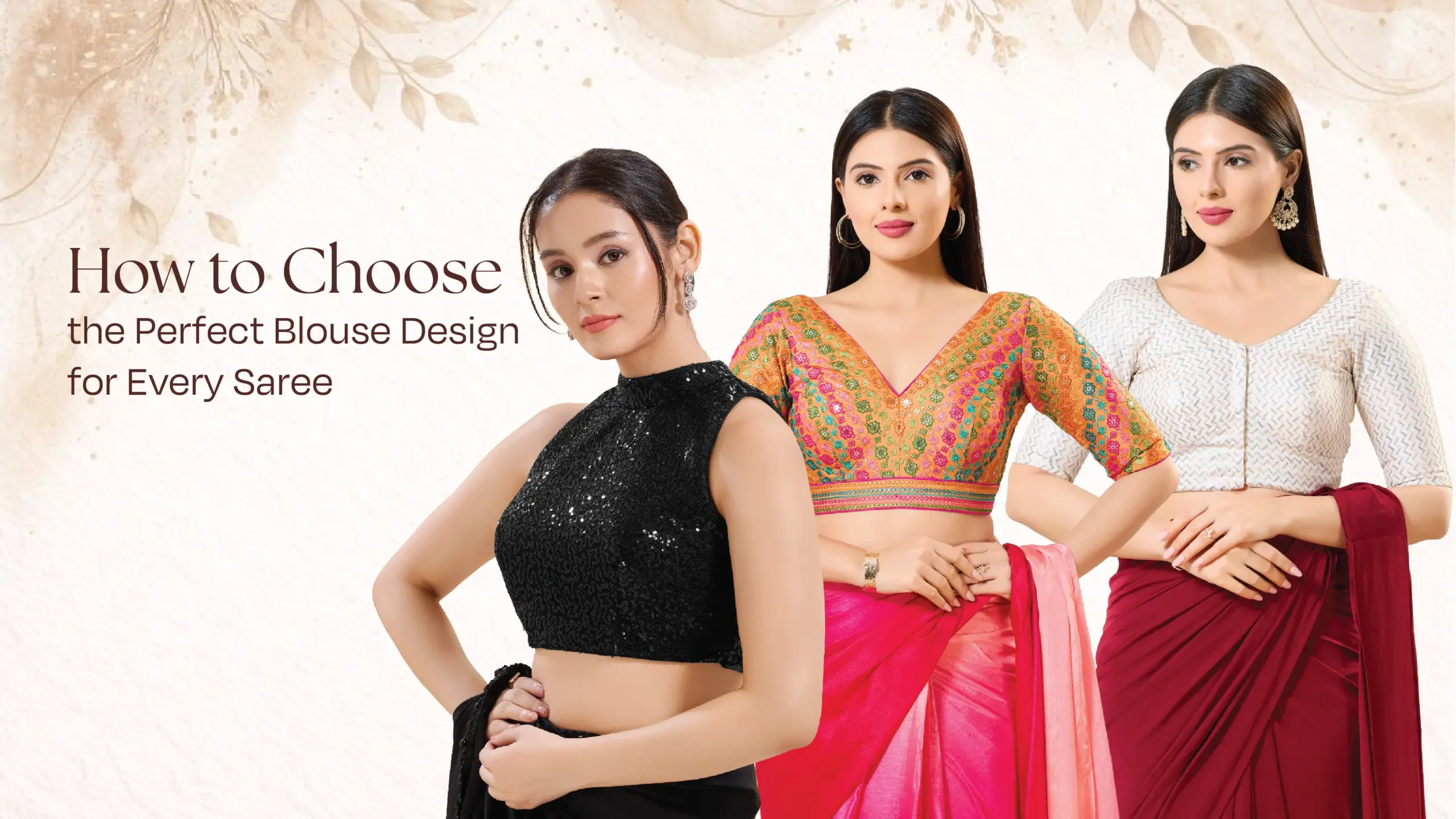
A blouse changes the entire look of an outfit, yet most shoppers pick one without thinking through fabric, fit or where it will actually be worn. The right choice depends on the event, the season and how much detailing sits well against the rest of the outfit. This guide breaks it all down clearly so the next purchase feels less like a guess.
Fabric and Fit: What Works Best for Each Occasion
Fabric decides how a blouse feels through the day.
-
Cotton stays light and breathable. It’s a fair pick for office hours or long outings in warmer weather, and it’s why a cotton blouse tends to get reached for first.
-
Silk and satin sit heavier and hold their shape better, so they get saved for evenings where a bit of shine helps.
-
Georgette and net fall lighter still. Both turn up often on blouses paired with sarees at festive gatherings.
Fit matters just as much. A fitted cut with darts gives a neat outline under structured sarees or lehengas. A relaxed cut sits better under looser drapes. Sleeve length is worth thinking about too. Full sleeves suit cooler months. Sleeveless and cap sleeves stay light on warmer days.
A few fit types worth knowing:
-
Princess-cut blouse: Fitted through the waist, works well under structured sarees
-
Peplum-style blouse: Flares slightly at the waist, suits a dressier look
-
Boxy-fit blouse: Loose through the body, pairs easily with palazzos or skirts
Colour and Style Types to Consider
Colour is usually where shoppers start. Deep bottle green suits festive wear. A lighter sage or mint works for day events instead, and either way, a green blouse covers a fair spread of shades. Red, mustard and fuchsia get picked for weddings often. Beige, white and other pastel or neutral tones sit better for office wear or daytime functions.
Neckline and back detailing also shape how formal or casual a blouse reads.
A high-neck, full-sleeve cotton blouse suits daytime festive events where coverage matters. A halter-neck blouse in silk leans towards evening functions instead.
Occasion-Based Picks
Occasion narrows the choice faster than colour or fabric alone.
-
Office wear: A boat-neck or high-neck blouse in cotton or a soft blend, minimal detailing
-
Weddings: A backless or halter-neck blouse in silk or net, often in a green blouse shade paired with gold thread work
-
Casual day functions: A short-sleeve blouse in a lighter fabric, no heavy embellishment
-
Winter events: A full-sleeve blouse worn under a shawl or jacket for added warmth
-
Summer indoor events: A sleeveless blouse in cotton or georgette, kept light and simple
Layering matters as much as the blouse itself. A full-sleeve piece under a wrap works well for cooler weddings, while a lighter cotton blouse style stays practical for daytime summer functions.
To Wrap Up
Fabric, fit, colour and occasion all play a part in how a blouse looks and wears through the day. Festive settings tend to favour a green blouse, while regular wear and daytime events lean on a cotton blouse instead. AJIO stocks 1,100+ Green blouse styles and 3,400+ Cotton blouse options, so there’s a fair range to pick from for most events on the calendar.
FAQs
1. Is a sleeveless blouse appropriate for an office daytime event?
It can, as long as the fabric isn’t too sheer. Keep the neckline modest for the setting.
2. What’s the distinction between a princess cut and boxy fit blouse?
A princess-cut blouse is fitted to the body, with darts. A boxy-fit blouse is not quite tight-fitting, rather it hangs free in the body.
3. Does colour choice change between festive and office wear?
It does. Festive occasions require brighter and richer hues whereas the office or daytime is usually dominated by muted or pastel colors.
4. Is Net fabric appropriate for a long event?
Net is light and airy, so it will do for longer festive occasions. It just needs gentle handling
5. Does the length of the sleeves need to change according to the seasons?
Generally, yes. Full sleeves are great for cooler weather and cap sleeves or sleeveless are more appropriate for warmer weather.